Transforming Data Centers: Building on Innovation for a Unified Ecosystem
Originally published on LinkedIn: December 8, 2024
Data centers are at the heart of our digital economy, driving innovation and powering critical workloads. However, their energy demands, such as the 10,000 MW forecasted for PJM regions, highlight the need for smarter, more sustainable solutions. Building new data centers can take three to four years, including navigating a lengthy licensing process that needs a dedicated software to manage. Additionally, we are still at least six to seven years away from achieving the energy infrastructure advancements needed to fully support this growth..Thanks to groundbreaking advancements in technology, much of the foundational work has already begun. From energy management and cooling optimization to renewable integration and lifecycle analytics, these solutions are paving the way for resilient, efficient data centers. The next step is to build on this momentum by integrating these tools into a unified, AI-driven ecosystem.
Innovative Foundations: Driving Change Across Key Areas
Remarkable progress is already being made across data center operations. Johnson Controls’ OpenBlue and Metasys platforms, for example, are streamlining building management by integrating HVAC, fire safety, and lighting controls. Similarly, EkkoSense’s, Sunbird and Nlyte thermal optimization software has reduced cooling costs by up to 30% while enhancing thermal compliance. On the energy front, Bloom Energy’s hydrogen fuel cells are delivering clean, reliable backup power, complementing innovations in battery technology such as solid- state and lithium-sulfur systems. Each of these solutions addresses critical challenges in energy efficiency, operational optimization, and sustainability.
At the same time, tools such as Makersite, Anthesis solution are enabling lifecycle management by providing insights into material choices, such as wood vs. low-carbon concrete, helping reduce scope 3
emissions. Cpower’s Distributed Energy Resource Management
(DERM) systems allow data centers to participate in demand response programs, optimizing energy use during peak times while supporting grid stability. Meanwhile, RouteZero and Leventen Energy are simplifying renewable integration through Power Purchase Agreements (PPAs) and Virtual Power Purchase Agreements (VPPAs), ensuring a seamless connection to green energy projects.
Unifying the Pieces: Creating a Cohesive Framework
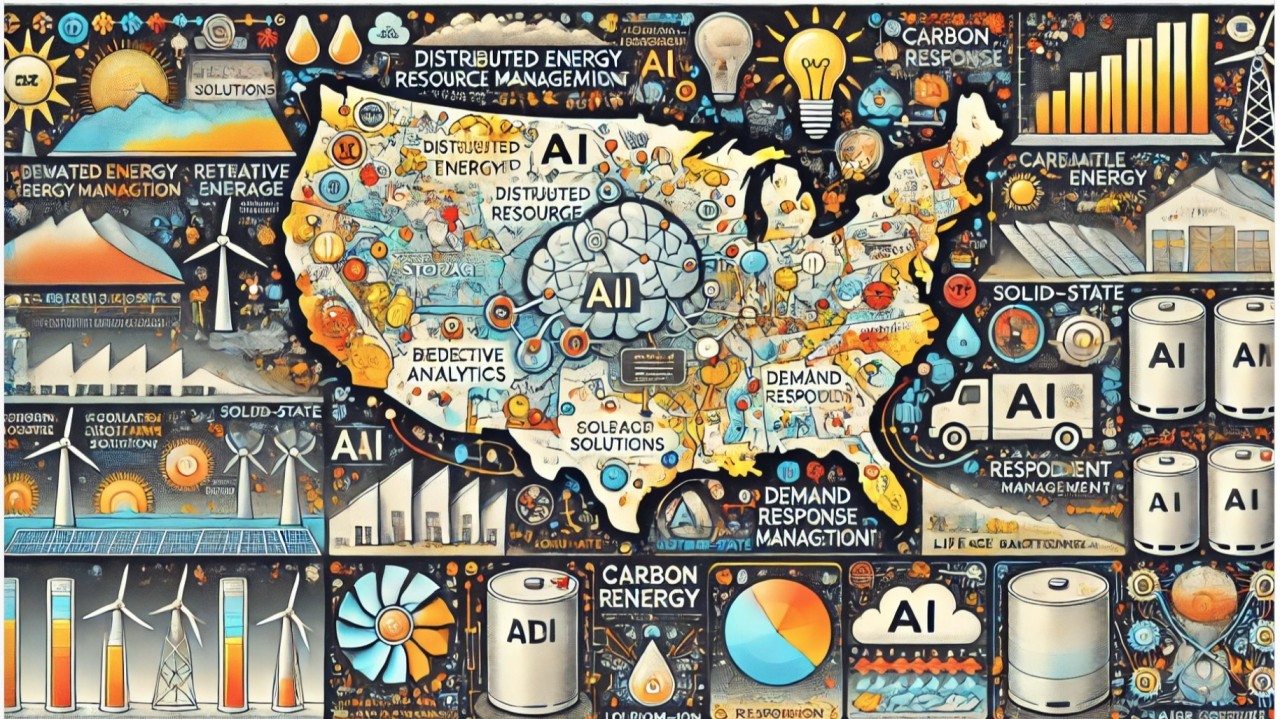
While these technologies are already delivering exceptional results, the next step is to unify them under a single operational framework. By integrating them into an AI-driven platform, data centers can achieve even greater efficiency and sustainability. Imagine a system where tools such as Sunbird, OpenBlue, Makersite provide material insights, Cpower optimizes energy use, and AI forecasts demand while coordinating cooling systems and lifecycle management in real time Effective load balancing through automated software during peak demand, combined with Battery Energy Storage Systems (BESS) for power storage and peak shaving, can help mitigate grid stress and ensure reliable energy availability during critical times.
This approach ensures that every element, from cooling and power to carbon offsets and renewable integration, works seamlessly together. For example, an AI-driven platform could automatically balance cooling loads, optimize battery discharge based on grid conditions, and manage carbon offsets through direct air capture (DAC) or Renewable Energy Certificates (RECs). It could also guide material selection by simulating the trade-offs between wood, steel, and low-carbon concrete, ensuring sustainable construction aligned with operational goals. Additionally, such a platform could incorporate advanced load balancing during peak demand and utilize Battery Energy Storage Systems (BESS) to enable peak shaving and reliable power storage, mitigating grid stress while maximizing energy efficiency.
Expanding Success: Scaling Innovation Across the Industry
The advancements made by tools such as Anthesis Group for emissions
tracking, TerraPower’s SMRs for clean energy production, and RouteZero
for renewable PPAs show that the industry is already moving in the right direction. These solutions are not isolated technologies; they represent a collective effort to build a sustainable, scalable future for data centers. By scaling and integrating these innovations, we can amplify their impact. For instance, Microsoft’s partnership with Ambri’s Liquid Metal™ Battery for backup power has already proven the viability of clean, grid-supporting energy storage, setting a benchmark for the industry.
Collaboration, Not Competition: Leveraging Complementary Strengths
It’s important to recognize that these tools are not competing solutions but complementary pieces of a larger puzzle. The work of innovators such as EkkoSense, Johnson Controls, Cpower, and Bloom Energy has laid a strong foundation. Now, the focus must be on creating a cohesive ecosystem where these technologies work together, guided by AI and predictive analytics. This approach not only builds on the success of individual solutions but also ensures a unified framework that maximizes efficiency, reduces emissions, and enhances resilience.
The Future: A Unified, Intelligent Ecosystem
The journey to sustainable data centers is well underway, driven by groundbreaking solutions that address energy, cooling, and lifecycle management challenges. The next step is to bring these tools together, creating an AI-driven ecosystem that integrates demand response, renewable energy, lifecycle analytics, and carbon offsets. By building on the remarkable work already done, the industry can transform fragmentation into opportunity, ensuring that data centers remain at the forefront of innovation, sustainability, and operational excellence. Together, these solutions can turn today’s challenges into tomorrow’s successes, driving the evolution of data centers toward a unified, intelligent future.
It is true that AI and data centers consume significant amounts of energy, particularly during training and operations. However, AI is also the key to unlocking exponential optimization. By leveraging AI to improve energy efficiency, optimize power distribution, and streamline operations, we can manage growing workloads while reducing environmental impacts, ensuring scalable, sustainable growth for the future.