

Nuclear Energy impact on Data Centers
Originally published on LinkedIn: December 28, 2025
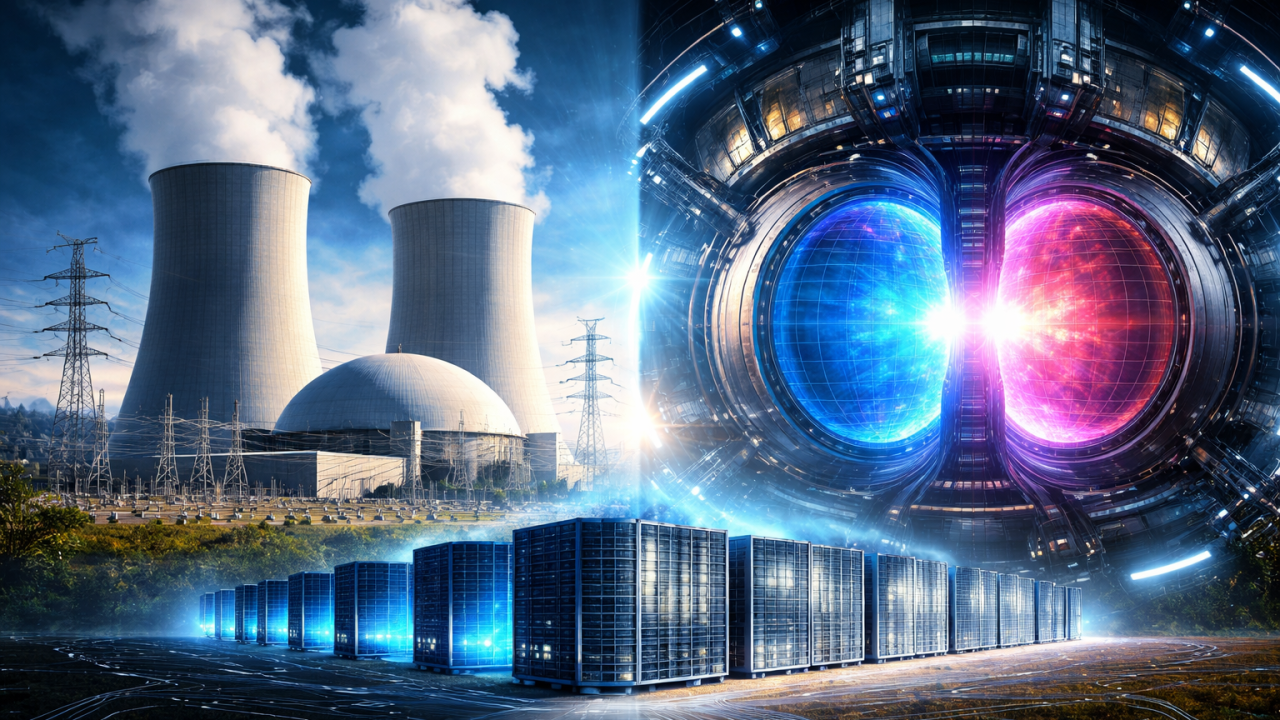
Nuclear energy is based on two fundamentally different processes: fission and fusion. Fission generates energy by splitting heavy atomic nuclei such as uranium, and it underpins all commercial nuclear power plants operating today. Fusion produces energy by combining light nuclei, typically hydrogen isotopes, replicating the reaction that powers the sun. While fusion offers the potential for higher energy density and significantly reduced long-lived radioactive waste, it remains technically complex and pre-commercial. Fission, by contrast, is a mature, regulated, and grid-integrated technology. For modern data centers and AI workloads, power availability, stability, and scalability are primary design constraints. Large-scale AI training clusters and inference platforms require continuous, high-density electricity with minimal interruption. As a result, data center operators are actively evaluating advanced fission solutions, including small modular reactors (SMR) and microreactors to provide reliable baseload power with low carbon emissions. These systems align well with the operational requirements of hyperscale facilities and can reduce dependency on constrained regional grids. Fusion’s relevance to data centers is longer-term but strategically important. If commercialized, fusion could provide large volumes of clean, steady power without the fuel and waste challenges associated with fission. Companies such as TAE Technologies are pursuing approaches that could eventually support grid-scale deployment. At the same time, advances in AI-driven modeling and control systems are accelerating fusion research, creating a reinforcing loop between AI development and future energy innovation. In practice, the energy strategy for AI infrastructure is increasingly diversified. Near-term expansion depends on a combination of fission, renewables, and energy storage to meet immediate capacity needs and sustainability goals. Fusion remains a high-impact future option rather than an operational solution today. Together, these technologies shape a phased pathway in which fission supports current data center growth, while fusion represents a potential long-term transformation of how large- scale computing environments are powered.